

Cape Town’s new cleaning levy??
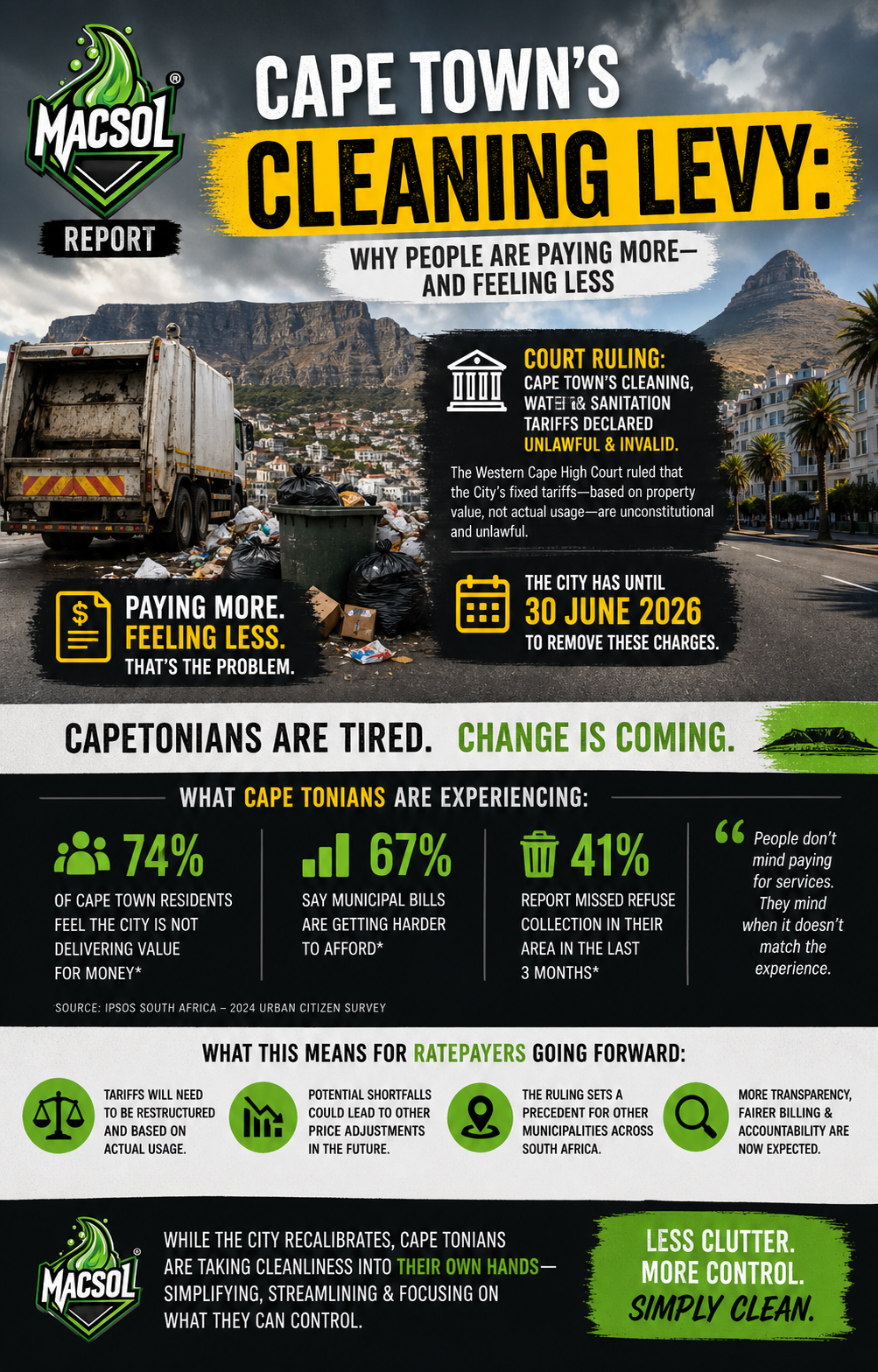
“Cape Town’s Cleaning Levy: Why People Are Paying More - and Feeling Less”
It starts with a bill.
Not a shocking one. Not one that makes you stop everything.
Just… slightly higher than you expected.
Again.
For many Cape Town residents, that’s been the experience over the past year -particularly with the introduction of city-wide cleaning levies tied to property value rather than actual usage.
At first, it felt technical. Administrative.
Now, it feels personal.
The Court Just Changed Everything
In a major ruling, the Western Cape High Court declared Cape Town’s cleaning, water, and sanitation fixed tariffs unlawful and invalid.
These charges - introduced in the 2025/2026 municipal budget - were linked to property value, not actual service usage.
The court found that:
The city had overstepped its legal authority
The tariffs were inconsistent with the Constitution and legislation
And most importantly: services must be charged based on usage, not property value
The ruling gives the City until 30 June 2026 to remove these charges.
Why This Hit a Nerve
On paper, it was a funding mechanism.
In reality, it felt like something else.
Because for many residents:
You could be using minimal services… but still paying more
Two households with similar usage could pay very different amounts
And the link between what you pay vs what you experience started to feel blurred
That disconnect is where frustration grew.
Not outrage - but a steady, quiet fatigue.
The Numbers Behind the Feeling
Cape Town generates billions in municipal revenue each year, with spending spread across policing, infrastructure, public services, and cleaning.
But here’s the key tension:
The cleaning levy was applied city-wide, regardless of how much you personally used or benefited from it
It formed part of a broader tariff structure that residents and property groups challenged in court
And ultimately, the court agreed: the model itself was flawed
In simple terms:
People weren’t necessarily rejecting paying
They were rejecting how they were being charged
A City That’s Not Rebelling - Just Tired
What’s interesting is the tone across Cape Town.
This isn’t a city in revolt.
It’s a city… asking questions.
“What exactly am I paying for?”
“Why does it feel inconsistent?”
“Why does it feel like more… for less?”
There’s still respect for the complexity of running a city.
Cape Town, after all, is one of the best-run metros in South Africa, consistently receiving clean audits and strong governance ratings.
But good governance doesn’t remove pressure.
And right now - people are feeling it.
What This Means for Ratepayers Going Forward
This ruling isn’t just a win - it’s a reset.
Going forward:
1. Tariffs will need to be restructured
The City now has to redesign how it charges for cleaning, water, and sanitation - aligning it with actual usage, not property value.
2. Potential shortfalls are coming
The City has already indicated that removing these fixed charges could make it harder to recover revenue, meaning other pricing adjustments could follow.
3. A broader national impact
This ruling sets a precedent - other municipalities across South Africa may now need to rethink similar tariff structures.
4. More transparency (expected)
At the very least, residents will likely demand clearer, more rational billing structures going forward.
Final Thought
This isn’t just a story about cleaning levies.
It’s about something deeper:
The relationship between what we pay… and what we feel.
Cape Town is recalibrating that balance right now.
And like always -
the real story isn’t just in policy.
It’s in how people respond.
